







The Future is Now: Mustafa Süleyman's Bold Vision for Artificial Intelligence's Transformation of Professions
Discover Microsoft Artificial Intelligence CEO Mustafa Süleyman's predictions on how Artificial Intelligence will transform professions. Learn the essential skills needed for future success.
 Berkay Batallı
The Future is Now: Mustafa Süleyman's Bold Vision for Artificial Intelligence's Transformation of Professions!
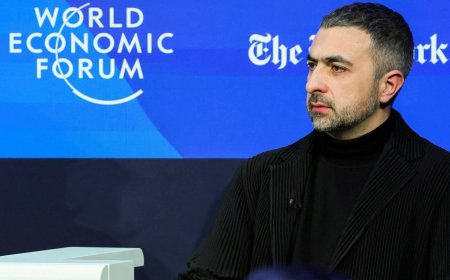
Are you ready? Because Artificial Intelligence is poised to fundamentally transform many professions as we know them. And this change is much closer than we imagine! Recently, Mustafa Süleyman, the visionary at the helm of Microsoft Artificial Intelligence, shared such striking predictions about the future that it forced us to rethink our industry and our careers. So, what do Süleyman's ambitious words truly signify, and what roadmap do they draw for us in the EdTech world?
Süleyman specifically addressed the future of professional occupations. According to his forecast, many professions will move towards full automation within a short span of 12 to 18 months. This timeline stands before us, moving at what feels like light speed, urging us to swiftly adapt to this revolution. Incredible, isn't it?
So, which professions exactly are we talking about? Among the areas Süleyman pointed to are traditional 'white-collar' professions such as lawyers, accountants, and project managers. He stated that these fields will rapidly transform with Artificial Intelligence systems performing at human levels, and some tasks could even be fully undertaken by Artificial Intelligence. Just imagine file scanning, legal research summaries, or accounting records being flawlessly managed by Artificial Intelligence... This is no longer science fiction; it's a very near reality.
Mustafa Süleyman defines the concept of Artificial General Intelligence (the state of Artificial Intelligence performing at or surpassing human intelligence) as 'a system capable of performing professional-level tasks'. This implies that Artificial Intelligence could undertake not only repetitive, routine tasks but also complex decision-making processes. Süleyman emphasized that the transformation in the software sector has already begun, and these developments will lead to fundamental changes in the labor market. What do you think, could Artificial Intelligence one day write our news articles too?
Of course, such predictions immediately bring to mind the question: What about us? What will our role be? It is precisely at this juncture that a significant responsibility falls upon us, the EdTech sector. Keeping pace with this rapid change, acquiring new skills, and updating our existing competencies is no longer just a choice, but a necessity. Skills such as continuous learning, adaptability, and critical thinking are more valuable than ever before.
In this transformation brought about by Artificial Intelligence, inherently human abilities such as creativity, empathy, strategic thinking, and our capacity to manage complex human interactions will become far more prominent. We will need professionals who can effectively utilize Artificial Intelligence tools, collaborate with them, and evaluate the resulting outputs within an ethical framework more than ever before. This, in fact, offers an opportunity to elevate our human potential into new domains.
As EdTech Turkey, we stand by you at every step of this transformation. From corporate training to individual development programs, we continue to offer the most current and effective solutions to cultivate the new competencies required by the Artificial Intelligence era. Remember, we are not waiting for the future; we are building it together. The perfect time to board this transformation train is now!
EdTech Turkey Editor Note
Mustafa Süleyman's predictions carry immense excitement and responsibility for the education technology sector. These developments underscore the critical importance of vocational training and continuous learning once again, while multiplying our potential to guide individuals and institutions towards the future.