














The Future's Eyes: How Apple's Visual Intelligence Will Revolutionize Education Technology
Explore Apple's visual intelligence technology, from iPhone integration to wearable devices. Discover how this innovation will revolutionize education and transform learning experiences for the future.
 Berkay Batallı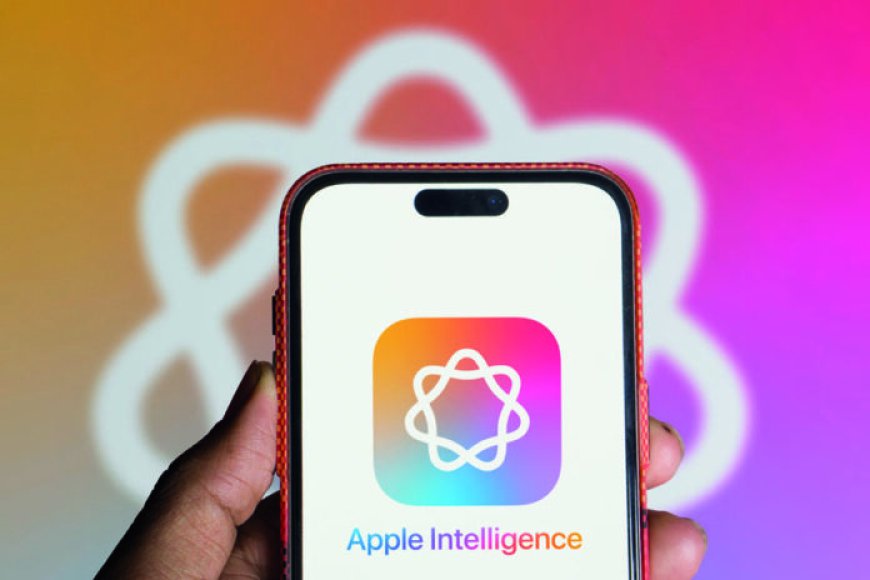
The Future's Eyes: How Apple's Visual Intelligence Will Revolutionize Education Technology
In this era where we struggle to keep up with the pace of the digital world, every new technological advancement opens up brand new horizons, especially in education. But what if your phone, or perhaps even your glasses, could help you understand the world just by looking at you? This is precisely where Apple's visual intelligence technology steps onto the stage, carrying us into the future with the demeanor of a magician.
Apple CEO Tim Cook recently emphasized that this unique capability is by far the leader among the company's artificial intelligence features and has become one of the most beloved by users. Just think, if a technology giant gives such clear praise, how immense must the potential of this feature be?
First introduced with the iPhone 16 models via a simple button on your camera, this feature is actually much more than a digital assistant. Imagine pointing your camera at a street sign and having it instantly translated into your language, adding an event from a brochure to your calendar with a single tap, or instantly seeing reviews and photos of a restaurant you spot... Small but life-saving details, aren't they?
However, Apple clearly indicates that this feature won't be limited to the camera. With the iOS 26 release, visual intelligence has expanded to everything on your phone's screen. Now, even an ordinary-looking internet address in a screenshot you take can turn into a clickable link with a single tap. As Tim Cook also underscored, this allows users to interact faster with content and easily access information.
So, how will all of this change the world of EdTech, or education technologies? Let's imagine: A student can instantly view detailed information, explanations in different languages, or even three-dimensional models of a historical artifact as soon as they take a photo of it. Or an engineering student, looking at a part of a complex machine, can see its function, connection diagram, or troubleshooting methods directly on their screen. This makes learning much more experience-based and interactive.
Rumors and industry whispers signal that Apple will take this visual intelligence feature much further. Reliable sources like Mark Gurman are discussing that the next-generation high-end AirPods Pro 3 and especially Apple Glasses models, expected to be introduced towards the end of the year, will center around this technology. Thanks to the cameras on these devices, they are expected to instantly analyze our surroundings and provide us with real-time information. In other words, everything you see with your eyes will be enriched with a layer of information!
This holds revolutionary potential for the presentation of educational materials, practical trainings, and even distance learning experiences. It's no longer a distant possibility for a medical student to receive realistic feedback in surgical simulations thanks to visual intelligence combined with virtual reality, or for a language student to practice by instantly translating signs and menus in a foreign environment. Visual intelligence will move us beyond simply consuming information to actively interacting with it.
Tim Cook's special interest in this feature and his future vision clearly indicate that visual intelligence will cease to be just a phone feature and become a fundamental part of wearable technologies and, consequently, future educational environments. Are you ready, because the way we learn may soon be redefined every moment we look around us!
EdTech Turkey Editor Note
These advancements in Apple's visual intelligence technology hold the potential to initiate a paradigm shift in the world of education. By facilitating access to information and personalizing learning, it emerges as a significant step that will shape future learning experiences.