














A New Era with OpenAI's GPT-5.3 and Codex Spark!
Dive into the education technology revolution with OpenAI's new Artificial Intelligence models, GPT-5.3 and Codex Spark. Discover how learning experiences and software development are being transformed.
 Edtech Türkiye
Speed Meets Intelligence in Education: A New Era with OpenAI's GPT-5.3 and Codex Spark!
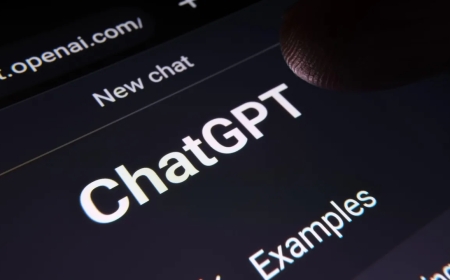
Dear EdTech Turkey readers, get ready! A storm has erupted in the world of Artificial Intelligence, and it seems education technologies will be significantly swept up in its winds. OpenAI, with a surprising announcement, introduced the anticipated GPT-5.3 architecture and the groundbreaking Codex Spark for developers. So, what does this mean? Could the classrooms of the future, learning experiences, and even how developers work be fundamentally transformed?
OpenAI, with no intention of relinquishing its leadership in the Artificial Intelligence race, has truly raised the bar to an almost unreachable point with this latest move. These newly introduced models promise “high speed” and “zero latency.” Dubbed the first major tech bombshell of 2026, this announcement marks Artificial Intelligence’s biggest step toward becoming not just an “answering” assistant, but a “real-time thinking” one. And for education and learning processes, it opens the doors to a whole new world.
GPT-5.3: Reasoning Power Meets Speed
Unlike its predecessors, GPT-5.3 is not just a language model; it operates with a brand new algorithm that OpenAI calls “Reasoning-Fast.” The biggest difference with this model is its ability to solve complex logical sequences not in seconds, but in milliseconds. Imagine a student’s momentary hesitation in front of a difficult math problem, or a question about a grammar rule in a language learning application, receiving a response at a thousandth of a second speed! This is a revolutionary step for personalized learning assistants.
One of GPT-5.3’s most impressive features is its Dynamic Processing Capacity. This means the model dynamically adjusts its processing power according to the complexity of the query. While providing “ultra-fast” answers to simple information requests, it runs a multi-layered verification mechanism in the background for topics requiring in-depth analysis. This offers us unique opportunities in areas like instant optimization of educational content and providing students with questions tailored to their difficulty levels.
Another incredible innovation is Multimodal Integration. The new model can process audio, video, and text simultaneously, without any delay. This means a response time in real-time translation and visual analysis that is close to the human brain. Virtual laboratories, language learning applications, sign language translators, or interactive lessons introducing historical artifacts can now offer a much more fluid and inclusive experience, don’t you think?
Codex Spark: Developers' New Light-Speed Partner
OpenAI’s Codex series, which shook the software world, has evolved into a whole new dimension with its Spark version. Codex Spark is an engine specifically developed with a focus on low-latency. This is incredible news, especially for developers creating EdTech platforms!
Now, developers will be able to scan thousands of lines of code blocks in seconds and correct errors in real-time, even as they write the code. It’s like having a super-intelligent colleague sitting next to you, understanding everything you write. Spark’s greatest ability is its “contextual foresight.” By analyzing the overall architecture of a project, it can predict the next function to be written with 90% accuracy and optimize the project as a whole. This will not only accelerate the development processes of EdTech products but also increase the quality and efficiency of the resulting software. Can you imagine how important it is for the world of learning to release educational software faster and with fewer errors?
So, Why Is Speed So Crucial?
As OpenAI’s CEO emphasized in his presentation, the biggest obstacle for Artificial Intelligence was “thinking time.” Now this barrier is breaking down, and its implications for every aspect of our lives, especially education, will be enormous.
- Autonomous Systems and Simulations: With near-zero latency, Artificial Intelligence will be able to make much safer and more realistic decisions in Virtual Reality and Augmented Reality-based educational simulations. For instance, medical students will be able to experience surgical operations, and pilots flight training, with real-time, fluid feedback.
- Cost Efficiency: Faster processing capacity means lower server costs and EdTech companies using this technology via Artificial Intelligence APIs can do more work with less expense. This paves the way for more affordable and accessible educational solutions.
- Personal Assistants and Learning Coaches: With the elimination of waiting times, “real-time conversing” digital identities, replacing services like Siri or Google Assistant, will take center stage in our lives. You’ll be able to have instant, seamless conversations with a learning coach or virtual teacher, and receive immediate feedback on your assignments. This truly could be the pinnacle of personalizing the learning experience!
OpenAI’s move is seen as a very strong response to announcements from other major players in the sector, such as Google’s Gemini 2.5 and Anthropic’s Claude 4. Especially the impact of Codex Spark on the developer community could effectively render the capabilities of GitHub Copilot and similar tools as “old technology.” EdTech firms, too, seem poised to join this race for speed. In summary, the future of Artificial Intelligence technologies is shaping up much faster and smarter than we ever imagined. We at EdTech Turkey will continue to closely follow these developments. Don't you think an exciting era is beginning?
EdTech Turkey Editor Note
These developments raise the standard for personalized learning experiences with instant feedback in the education technology sector. They pave the way for more innovative EdTech solutions by accelerating developers' workflows. In the future, a much richer learning ecosystem, supported by Artificial Intelligence, awaits us, where every student progresses at their own pace and according to their interests.