










Bill Gates' AI Explosion Warning: What It Means for Turkish Institutions and the Future of Work
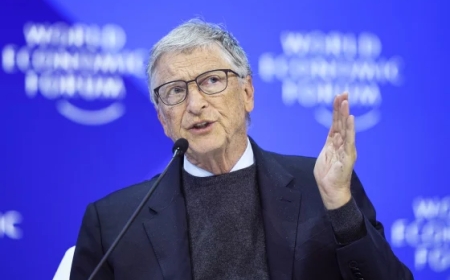
In his Davos statements, Bill Gates highlighted the potential risks of the Artificial Intelligence explosion on market valuations and the workforce.
 Edtech Türkiye
Bill Gates' AI Explosion Warning: What It Means for Turkish Institutions
The World Economic Forum is a crucial meeting point that gauges the pulse of business and technology. Among the notable speeches at this year's forum was one by Bill Gates, a leading figure in the technology world. Gates issued significant warnings regarding the recent Artificial Intelligence explosion, sharing serious assessments particularly on its effects on market dynamics and the workforce. So, what messages do these warnings convey for Learning & Development professionals, Corporate Training managers, and Human Resources departments in Turkey?
AI Volatility and Market Concerns
According to Gates' statements in Davos, not every company caught in the Artificial Intelligence wave should expect to succeed. It is stated that some firms may struggle to justify their current high valuations, and sharp stock market corrections could occur as competition intensifies. This indicates that markets should question their excessive optimism regarding Artificial Intelligence technology. For institutions in Turkey, this highlights the need to evaluate Artificial Intelligence investments strategically and realistically. In which areas can Artificial Intelligence yield efficiency, and which investments are sustainable? The answers to these questions are critically important.
Is an AI-Driven Workforce Transformation Imminent?
One of Bill Gates' most striking predictions was that the transformation Artificial Intelligence would create in the workforce is imminent. Gates expects Artificial Intelligence to create a visible impact in both white-collar and blue-collar jobs within 4-5 years. Arguing that governments are not fully prepared for the speed and scale of this change, Gates emphasizes the need to develop policies against increasing inequality and workforce pressure. For Human Resources and Learning & Development departments in Turkey, this situation requires urgent action plans. How will job descriptions change? Which skills will come to the forefront? How will employees prepare for this new era? Micro-learning, continuous training, and skill transformation programs should move higher up on institutions' agendas.
The Role of Big Tech and Long-Term Potential
Gates' comments come at a time when major technology companies like Microsoft, Alphabet, Amazon, Meta, and Oracle are pouring hundreds of billions of dollars into Artificial Intelligence infrastructure. While these investments fuel market gains, they also deepen valuation concerns. Despite all these warnings, Gates remains optimistic about the long-term potential of Artificial Intelligence. He particularly believes that Artificial Intelligence will provide significant benefits in sectors such as health, education, and agriculture. For instance, the Gates Foundation's efforts in collaboration with OpenAI to expand AI-powered healthcare services in clinics in Africa are a concrete example of this positive potential.
As the EdTech Turkey platform, while focusing on the long-term benefits of Artificial Intelligence in education and development, we believe that institutions in Turkey should accelerate their strategic planning by taking Gates' warnings into account. Preparation for change must begin today and be treated as a continuous adaptation process. Institutions should view Artificial Intelligence not merely as a technological tool, but also as a strategic transformer reshaping business methods, talent management, and Learning & Development processes. Let's not forget that shaping the workforce of the future today is key to gaining a competitive advantage.
EdTech Turkey Note
As EdTech Turkey, we closely follow the opportunities and risks brought by Artificial Intelligence. We aim to provide knowledge and tools to help Turkey's Learning & Development sector adapt to this major transformation. We believe that institutions must prepare for the future with strategic Human Resources and Education investments.