











The “Feeling Not Good Enough” Loop: How It Slows Learning and Skill Growth
The “feeling not good enough” loop can quietly sabotage learning by reducing questions, practice, and openness to feedback. This article explains how the loop starts, why it slows skill growth, and five practical ways to design safer learning—plus how short pulse checks (tested.com.tr) can make progress visible.
 Edtech Türkiye
You’re learning something new. From the outside, you look fine—maybe even successful.
But inside, a quiet thought shows up:
“I’m not actually good at this… and sooner or later, people will notice.”
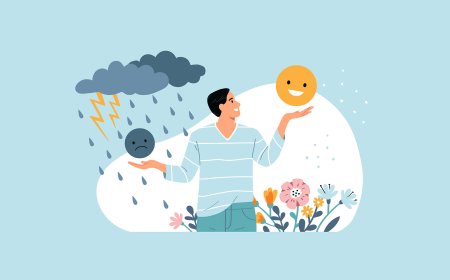
Let’s name this clearly: the “feeling not good enough” loop.
Not because it’s one single emotion—but because it often becomes a repeating chain of thoughts and behaviors that slows learning down.
The good news: it’s common. And with the right learning design, it’s manageable—both for individuals and for organizations.
How the loop starts
The trigger is usually simple: newness.
A new role, a new system, a new process, a new leadership skill, a new way of presenting…
Our brains love familiarity. New situations naturally create discomfort.
That discomfort can turn into thoughts like:
-
“Everyone else gets it faster than I do.”
-
“If I ask a question, I’ll look weak.”
-
“If I make a mistake, I’ll lose credibility.”
And that’s where the loop begins.
The real damage: It cuts off learning fuel
Learning grows through three behaviors:
asking questions, trying things, and receiving feedback.
The “not good enough” loop pushes people in the opposite direction:
-
they avoid asking questions (to avoid being “exposed”)
-
they avoid trying (to avoid mistakes)
-
they take feedback personally (as proof they’re failing)
So practice decreases. When practice decreases, growth slows.
And when growth slows, the feeling gets stronger.
That’s why we call it a loop: it reinforces itself.
Don’t try to “remove the feeling”—design learning to feel safer
The most effective response in workplace learning is not simply “motivate harder.”
It’s to design environments where learning is safe to attempt.
Here are five practical moves that work well in real training programs:
1) Normalize struggle early
One sentence at the start of a session can change everything:
“It’s normal to struggle at points—this is a new skill.”
That simple framing breaks the harmful equation:
“Struggle = proof I’m not good enough.”
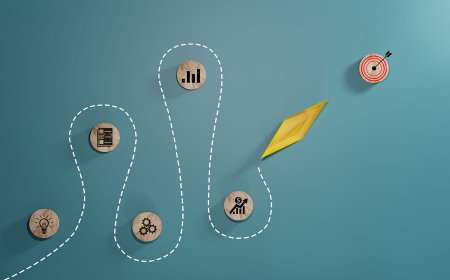
2) Shrink the goal: One step today
This loop grows when goals feel huge.
Instead of:
-
“Become great at feedback”
Move toward:
-
“Write one clear feedback sentence”
-
“Practice one difficult moment”
Small wins are the antidote.
3) Make questions low-risk
In many teams, questions feel like a test.
Two simple methods reduce pressure fast:
-
Anonymous question collection
-
Trainers modeling questions (“You might be thinking…”) before learners speak
When questions become normal, learning speeds up.
4) Practice safely before real life
Behavior skills don’t grow through watching—they grow through rehearsal.
But people hesitate to “try” in the real workplace.
So build practice layers:
-
Scenarios
-
Role-play
-
Retry loops with coaching notes
The message should be explicit:
“This is the place to make mistakes—on purpose—so real work becomes easier.”
5) Turn feedback into a roadmap, not a verdict
Feedback can either shrink learners or strengthen them.
A short structure works well:
-
What worked
-
What to try next
-
What the next practice target is
Learners should feel “developed,” not “judged.”
Can we measure progress in a way that helps?
Yes—and measuring progress often reduces the loop because it makes growth visible.
Instead of long exams, use lightweight indicators:
-
Short scenario decisions
-
Quick “decision moment” questions
-
Repeated checks 2–4 weeks apart
On tested.com.tr, teams can run short mini-tests to track decision reflexes over time. When people see improvement, the inner narrative often shifts from “I can’t” to “I’m getting better.”
Editor’s note (EdTech Türkiye)
This loop is often silent. People rarely say it out loud.
But it can quietly slow learning more than any content problem.
The solution isn’t “more pressure.”
It’s safer practice, smaller steps, and more human feedback.
That’s how skill growth becomes sustainable.