












5G in Education: Transforming Future Classrooms with VR/AR
Explore how 5G technology transforms education with virtual reality, augmented reality, smart classrooms, and personalized learning experiences.
 Berkay Batallı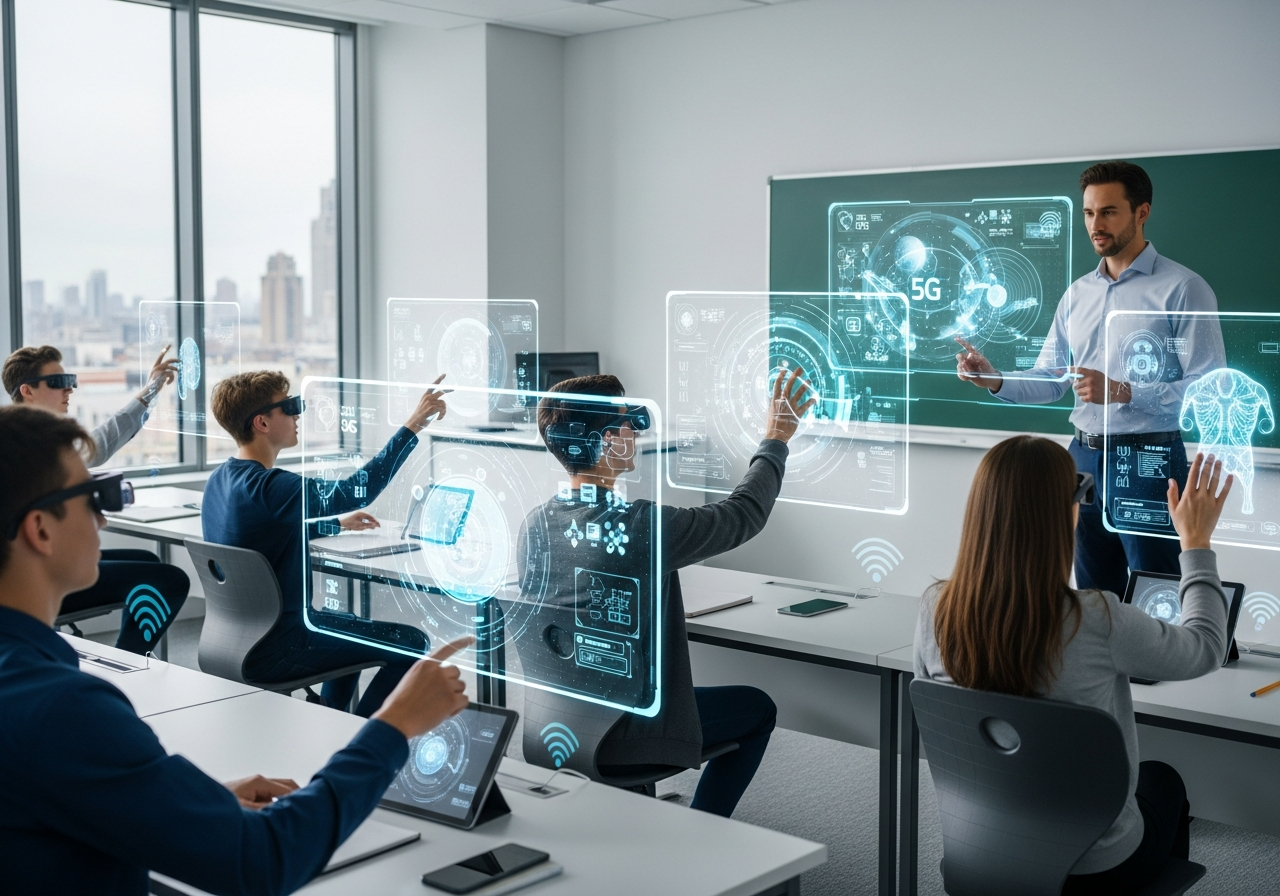
The Impact of 5G on Education: How Will Future Classrooms Change?
Imagine this: You're taking your students on a virtual field trip to a museum on the other side of the world. Thanks to high-resolution 3D models, you can examine the artifacts in the finest detail and even interact with them. This is just one of the possibilities of 5G. So, how will this technology change education?
What is 5G and Why is it Important for Education?
5G is the fifth generation of mobile internet technology, offering significant advantages over previous generations, such as much higher speeds, lower latency, and the ability to connect more devices simultaneously. In education, this translates to richer and more interactive learning experiences. Low latency will allow virtual reality (VR) and augmented reality (AR) applications to run more smoothly, while high-speed internet will make it easy to download and share large lesson materials and videos.
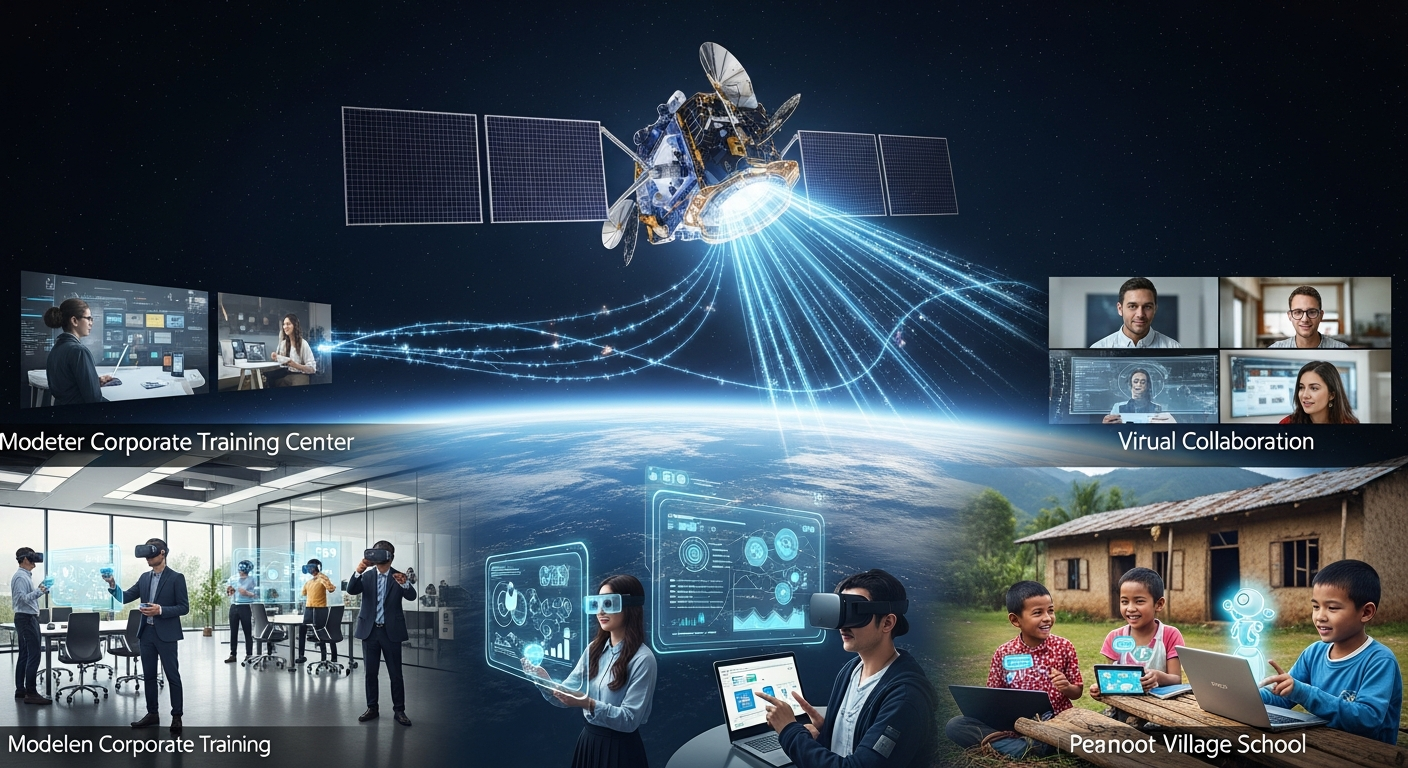
With the introduction of 5G in Turkey, equal opportunities in education may also increase. Students in rural areas or schools with inadequate internet infrastructure, in particular, can access richer resources, participate in online classes, and have the same learning opportunities as other students thanks to high-speed internet.
A New Dimension in Education with Virtual and Augmented Reality Applications
One of the most exciting potentials of 5G is its ability to popularize the use of virtual and augmented reality (VR/AR) applications in education. Recreating historical events, visualizing complex scientific concepts, or creating simulations where students can develop their manual skills will now become easier and more accessible.
For example, in a history class, students can wear VR glasses and take a tour of ancient Rome, virtually visit the Colosseum, and witness the lives of gladiators. In science class, students can examine a human body with AR applications and learn how organs work. These kinds of experiences will allow students to participate more actively in the learning process and understand information better.
Smart Classrooms and Personalized Learning Experiences
With the widespread adoption of 5G, schools can transform into smart classrooms. Smart boards, interactive lesson materials, student tracking systems, and other smart devices can communicate seamlessly with each other thanks to 5G, helping to personalize the learning experience for students.
Teachers can better understand students' learning speeds, interests, and strengths/weaknesses thanks to 5G-powered analytical tools. Based on this information, they can develop customized lesson materials and learning strategies for each student. This allows students to learn more effectively and maximize their potential.
A New Era in Distance Education
The pandemic has once again highlighted the importance of distance education. 5G can solve many of the problems encountered in distance education. Thanks to high-speed and reliable internet connections, online lessons will become smoother, video conferences will work more seamlessly, and students will be able to access learning materials whenever they want.
5G can also help create a more interactive and participatory learning environment in distance education. Virtual classroom environments, joint projects, online discussion forums, and other collaboration tools will allow students to interact with each other and actively participate in the learning process.
New Opportunities for Education Technology Developers
The use of 5G in education also creates new opportunities in the education technology (EdTech) sector.